

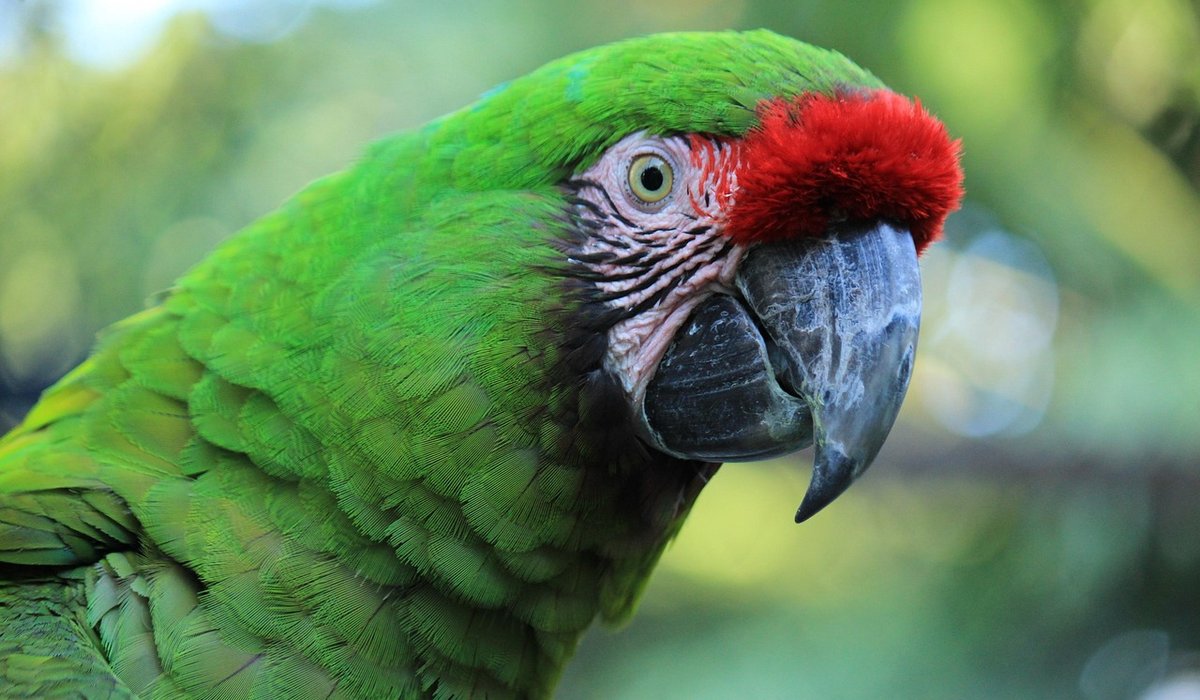
Parrots are built to work for their food. In the wild, a macaw might spend hours cracking nuts or stripping bark, while a budgie grazes on seeding grasses for most of the morning. At home, food arrives in a bowl in seconds, and all that mental energy has to go somewhere. Left with nothing to do, birds often turn to feather plucking, screaming, bar chewing, or simply sitting still and looking flat.
Cardboard and paper are the cheapest answer to that problem. They can be chewed, shredded, ripped, stuffed and rebuilt, and they let you turn a plain meal into a puzzle. They are also perfect for the destructively minded. If your cockatoo reduces a wooden perch to splinters in a week, a stack of plain cardboard costs almost nothing and can be replaced without guilt. The aim is not to make life complicated — it is to give your bird something to do with its beak and brain every single day.
Not every piece of packaging is suitable. Birds explore with their beaks and tongues, and they swallow small fragments as they shred, so whatever is on the surface of the paper can end up inside your bird.
Kitchen roll tubes suit medium birds such as African greys and amazons, while toilet roll tubes are ideal for budgies, cockatiels and lovebirds. The principle is always the same: fold one end in, fill the tube, then fold the other end shut so the bird has to chew its way in.
Plain open boxes are endlessly adaptable, and you can often cut and refold them into something new. Start simple and increase the difficulty as your bird gets the idea.
Shredded paper is the workhorse of bird enrichment. Run plain paper, brown paper or black-and-white newspaper through a shredder, or cut it by hand into strips. Avoid glossy supplements and colour-printed leaflets. Use the shreds as bedding in a foraging tray, as stuffing for tubes, or as a loose pile for your bird to burrow in and throw about.
Plain paper muffin cases make excellent starter puzzles for smaller birds — press a treat into the base, fold the case over, and let your bird unwrap it. Plain paper bags work well too, provided you remove handles, staples and any tape. A scrunched ball of plain paper with a seed inside is often all it takes to occupy a budgie for twenty minutes.
Novelty matters more than complexity. A toy that has been in the cage untouched for a fortnight has stopped being enrichment, so rotate your cardboard and paper items every week and keep a small stash ready to swap in.
Supervise new items at first, especially with birds who swallow rather than shred. If your parrot is eating large amounts of paper, reduce access and offer more edible foraging instead, such as food wrapped in thin paper. Watch droppings, appetite and behaviour for any sign that something is not passing through normally.
Check paper items daily. Remove anything that is soggy, soiled or mouldy, and replace it rather than leaving it to dry out. Look at toes and legs each week for tightening threads. Some birds will weave shredded paper into their cage bars, which is harmless fun; others will chew it into a wet pulp, which should be cleared away.
Finally, match the challenge to the bird. Budgies and cockatiels want quick wins and lots of small shredding opportunities. African greys and macaws enjoy a puzzle with a few stages. Cockatoos simply want volume — give them plenty of thick card and let them demolish it. A few minutes of preparation on your part buys your bird hours of purposeful work, and that is enrichment at its best.

Madparrots We spend our time finding what works so you don't have to, and sharing exactly what made the difference.

Madparrots Simple, genuine and looked after with care — the kind of place worth returning to.

Any change in appetite, breathing, droppings or behaviour warrants a call. Early advice can prevent small problems becoming life-threatening emergencies.

Comments
ALina Kelian
19th May 2018 ReplyMadparrots We spend our time finding what works so you don't have to, and sharing exactly what made the difference. ullamco laboris nisi ut aliquip ex ea commodo consequat.
Rlex Kelian
19th May 2018 ReplyMadparrots Written for people who value the details, and want honest guidance they can trust. ullamco laboris nisi ut aliquip commodo.
Roboto Alex
21th May 2018 ReplyMadparrots We spend our time finding what works so you don't have to, and sharing exactly what made the difference. ullamco laboris nisi ut aliquip ex ea commodo consequat.