

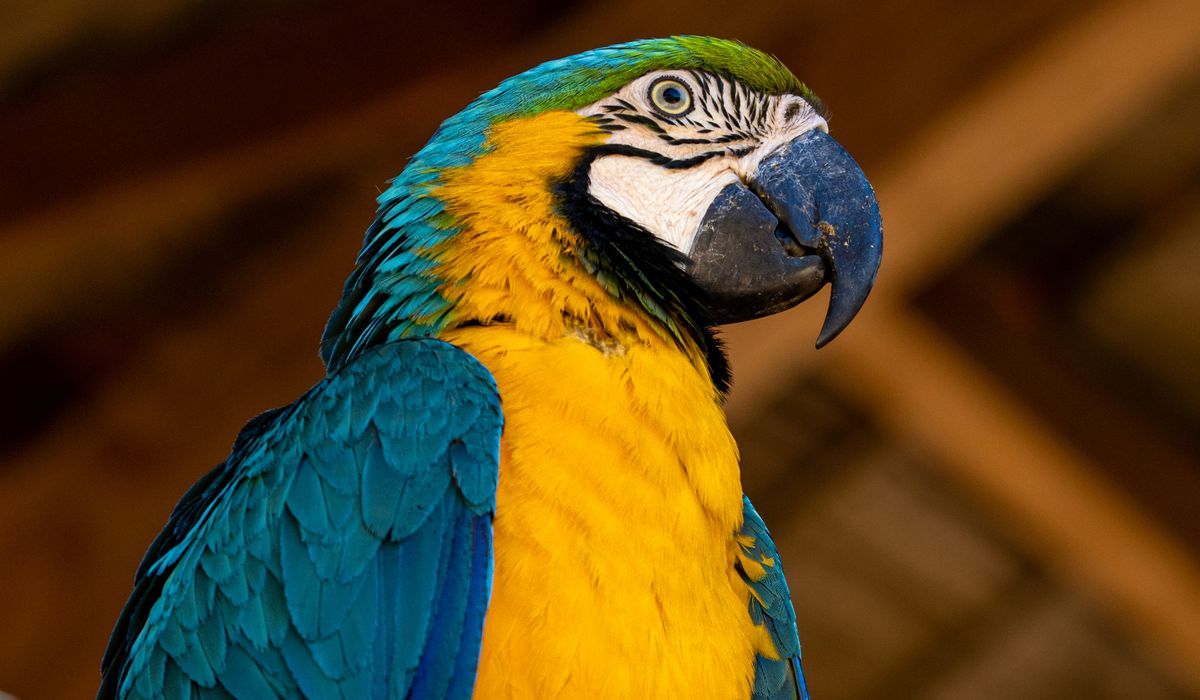
Parrots are subtle communicators. Unlike dogs or cats, they rarely offer a growl or a wagging tail to make their feelings obvious. Instead, they rely on posture, feather position, eye movement and tail action. Learning to read these signals is the single most effective way to prevent bites and build a trusting relationship. A parrot that feels understood is a parrot that feels safe. And a safe parrot is far less likely to lash out.
Many bites happen not because a bird is "mean" but because a human missed the quiet warnings. By the time a parrot lunges, it has usually been saying "please stop" for several seconds. Your job is to notice those earlier, gentler messages.
Before you can spot trouble, you need a baseline. Spend a few minutes each day simply watching your parrot when it is relaxed. A calm African grey might sit with feathers slightly puffed, one foot tucked up, beak grinding softly. A content cockatiel often perches with its crest lowered and eyes half-closed. A happy budgie might chatter and bob its head.
Note the details: how does your bird hold its head? Are the feathers on the neck smooth or slightly raised? Where is the tail? Is the beak open or closed? What colour are the eyes? In many species, the pupil is a small black dot surrounded by iris; in others, the whole eye darkens. Write these observations down or keep them in mind. This is your normal.
When a parrot is uncomfortable, its body language shifts. The following signals are common across many species, though each bird has its own dialect.
These signs are not always aggressive. A parrot may pin its eyes and flick its tail when it sees a favourite treat. The key is context.
Parrots experience a state called "arousal" – a heightened emotional state that can be positive (excitement for food) or negative (fear, anger). Both look similar. A bird that is aroused is unpredictable. It might bite, or it might simply scream and fly away.
To tell the difference, look at the rest of the body. A fearful bird often leans away, feathers slicked tight, eyes wide with visible white rings. An aggressive bird leans forward, feathers puffed, beak open, tail fanned. A playful bird might bob its head and make soft chirps while pinning its eyes. If you are unsure, assume it is a warning and give your parrot space.
Also consider the trigger. Did you just put your hand in the cage? Is there a new object nearby? Is it near bedtime? Parrots are often grumpier at dusk. Hormonal birds in spring can be more territorial. Knowing the context helps you respond appropriately.
When you see a warning sign, stop what you are doing. Do not push forward. Do not say "no" sharply – that adds excitement. Instead, freeze, then slowly withdraw your hand or step back. Give your parrot a few seconds to relax. You can offer a favourite treat from a distance if the bird is food-motivated and not too aroused.
If your parrot is on your hand and pins its eyes, slowly lower it to a perch or its cage. Do not fling it off. Teach your bird a "step down" cue so you can end interactions smoothly. Never punish a parrot for biting – punishment erodes trust and makes future bites more likely.
Prevention is about respect. Learn to ask permission before petting. Many parrots dislike being touched on the back, wings or under the wings, as this can be sexually stimulating. Stick to head and neck scratches if your bird enjoys them. Watch for the moment your bird turns its head away or lifts a foot to push you away – that is a polite "no".
Finally, remember that every parrot is an individual. A signal that means "I am excited" in one bird might mean "I am furious" in another. The more time you spend observing your own bird, the better you will become at reading its unique language. Patience and calm responses will build a bond based on trust, not fear.

Madparrots We spend our time finding what works so you don't have to, and sharing exactly what made the difference.

Madparrots Simple, genuine and looked after with care — the kind of place worth returning to.

Pellets, fresh vegetables, limited fruit and clean water form a healthy base. Avoid avocado, chocolate, caffeine and salty snacks at all times.

Comments
ALina Kelian
19th May 2018 ReplyMadparrots We spend our time finding what works so you don't have to, and sharing exactly what made the difference. ullamco laboris nisi ut aliquip ex ea commodo consequat.
Rlex Kelian
19th May 2018 ReplyMadparrots Written for people who value the details, and want honest guidance they can trust. ullamco laboris nisi ut aliquip commodo.
Roboto Alex
21th May 2018 ReplyMadparrots We spend our time finding what works so you don't have to, and sharing exactly what made the difference. ullamco laboris nisi ut aliquip ex ea commodo consequat.