

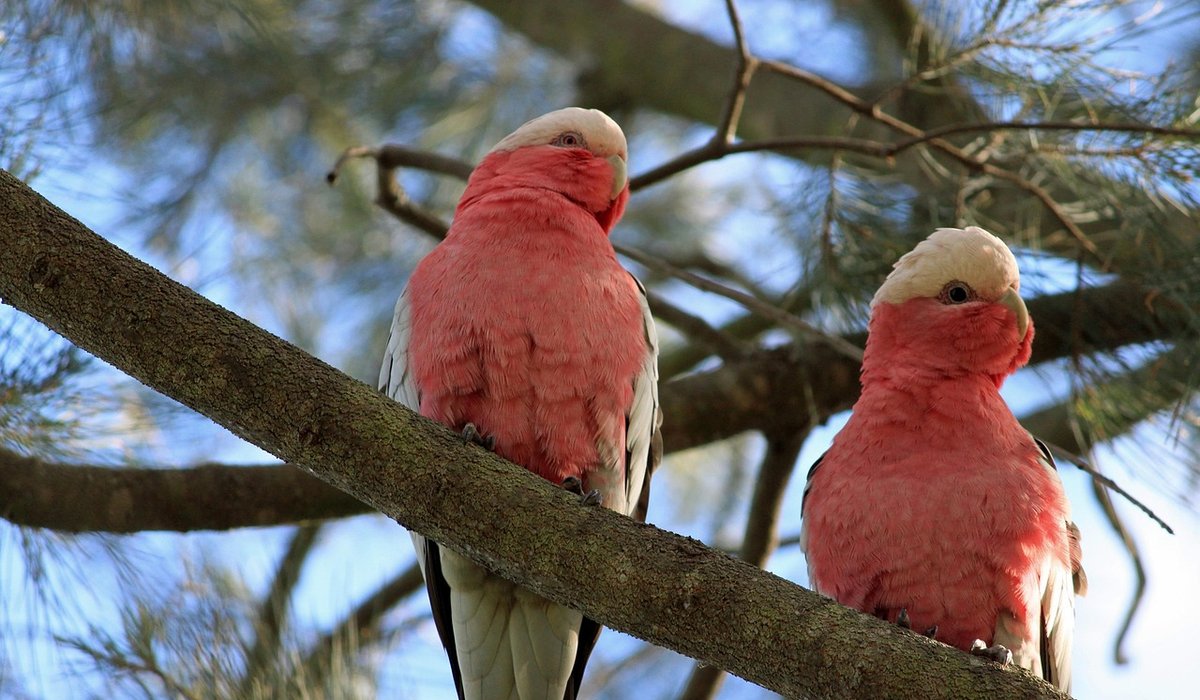
Ask most parrot keepers what they fuss over and you will hear about diet, cage size and toys. Perches often come last, chosen for looks or grabbed from the nearest pet shop without a second glance. Yet a parrot spends the majority of its life standing on its feet, and the surfaces beneath those feet shape its long-term health more than almost anything else in the cage.
Birds kept on smooth, uniform dowels develop pressure sores on the soles — a painful condition often called bumblefoot — because the same patch of skin takes the same load in the same place, day after day. Good perching is about variety: different diameters, different textures, different angles. Natural wood does this job beautifully, provided you choose it carefully.
A length of natural branch is irregular by nature. It swells, narrows, kinks and twists, so your bird's toes flex and grip differently at each point along it. That gentle, constant variation exercises the tendons in the feet and legs, keeps nails worn down more evenly, and spreads pressure across the whole sole rather than one hot spot.
Bark is a bonus. Many parrots enjoy stripping and chewing it, which is both enrichment and a natural beak conditioner. If you are lucky enough to have a garden, you have a free supply of the best perching material available — just make sure you know exactly what you are cutting.
In the UK, the following are widely regarded as safe for parrot perches once cleaned and dried: apple, pear, willow, birch, hazel, hawthorn, rowan, ash, beech, elm and lilac. Fruit woods from the apple and pear family are particular favourites because the wood is hard-wearing and the bark is usually well received.
Steer clear of these, whether as perches or chewed branches:
If you are unsure of a species, leave it. There is no perch worth an emergency vet visit.
The test is simple. When your bird grips the perch, its toes should wrap around roughly two-thirds to three-quarters of the circumference. If the toes meet underneath, the perch is too thin. If the foot sits flat and open like a dinner plate, it is too thick.
As a rough guide, budgies and other small parakeets do well on branches of about 1.5 to 2.5 cm in diameter; cockatiels and conures around 2 to 3.5 cm; African greys and Amazons roughly 3 to 5 cm; and the larger macaws and cockatoos somewhere between 5 and 7 cm. Offer several sizes rather than one, and include at least one perch wide enough to rest a flat foot on for part of the day.
Prepare branches properly before they go in the cage:
Never position a perch directly above a food or water bowl. Droppings fall, and a bird eating from a contaminated bowl is a bird heading for a bacterial problem. This is one of the most common mistakes in set-ups that otherwise look perfectly sensible.
Keep the same rule in mind for other perches — nothing should sit right beneath a bird that is likely to be roosting above it. Beyond that:
Wood does not last forever, and it should not. Scrub perches every week or two with hot water and a bird-safe disinfectant, rinse well and dry them thoroughly before returning them to the cage. Bark that has been chewed to shreds, wood that has softened, and anything with a fresh splinter should be replaced rather than repaired.
Rotate a few spare branches in and out of storage so your bird always has something new to explore, and treat a change of perch as an easy, inexpensive form of enrichment. Get the selection and placement right and you will see the benefits in your parrot's grip, its posture and its feet — quietly, every single day.

Madparrots We spend our time finding what works so you don't have to, and sharing exactly what made the difference.

Madparrots Simple, genuine and looked after with care — the kind of place worth returning to.

Foraging mimics wild feeding and reduces boredom. Hide nuts, seeds and pellets in paper parcels, cardboard tubes or puzzle feeders for healthy activity.

Comments
ALina Kelian
19th May 2018 ReplyMadparrots We spend our time finding what works so you don't have to, and sharing exactly what made the difference. ullamco laboris nisi ut aliquip ex ea commodo consequat.
Rlex Kelian
19th May 2018 ReplyMadparrots Written for people who value the details, and want honest guidance they can trust. ullamco laboris nisi ut aliquip commodo.
Roboto Alex
21th May 2018 ReplyMadparrots We spend our time finding what works so you don't have to, and sharing exactly what made the difference. ullamco laboris nisi ut aliquip ex ea commodo consequat.